Dallas Chapter

Welcome to the Dallas Chapter


Facebook


Youtube


Mailchimp


Envelope

SAVE THE DATE: NATIVE SEED WORKSHOP

Native American Seed packets

JANUARY 17, 2026 1:00-3:00 PM

Learn techniques to succeed with seed propagation.  Discover how to unlock our native seeds germination codes using cold stratification, scarification, or perhaps will start growing with no special treatment.

Location:

North Haven Gardens

7700 North Haven Road

Dallas, TX 75230

Giveaway ! ! !

Join us in person for this month’s meeting and you’ll be entered into a drawing to win this book! The Dallas
chapter will be giving away a copy of The Texas Native Plant Primer by Andrea DeLong-Amaya. 
(Must be present in person at the meeting to win. )

You can purchase the book at your local independent bookstore, or online here.


Save the date for the Fall Plant Sale! October 25th 10am-12p ( or until plants are sold out. ) Please bring any native plants you’d like to add to the sale – be sure to label plants (with common and botanical names).
We are looking for volunteers to staff the sale.Location is Oakland Cemetery 3900 Oakland Circle, Dallas TX 75215Please follow traffic directional signs once you enter the cemetery.  See our plant list and get more information here. Volunteer Request: We are searching for folks interested in helping to install a pollinator garden at Oak Hill Academy in Dallas. Please email the chapter to sign up for this group!

Registration is open for Fall 2025 Native Landscape Certification Program classes.

This fall, the Dallas Chapter is offering Native Landscapes for Birds September 27-28 and NLCP Level 1: Introduction to Native Landscapes October 18-19. Learn more or sign up here: npsot.org/our-work/class-schedule/


Stay in touch with the Dallas Chapter – sign up for our Newsletter, check out our Facebook page for more details and information.  Additionally, lots of great information can be found in our Newsletter Archives.

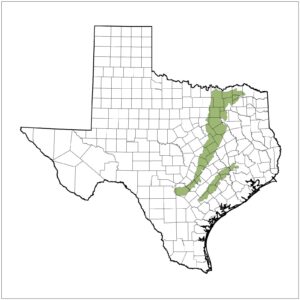
Map of Texas with Blackland Prairie shown

The Blackland Prairie

The Dallas Chapter of NPSOT includes all of Dallas County and the twenty-two cities within its boundaries. 

We are in the Blackland Prairie Ecoregion:  Average rainfall 28-40 inches with peak rainfall usually in May, Hardiness Zone 8A, average annual minimum temps 15-10 degrees.

Wildflower Planting dates for our area are:
Spring – January 15th thru March 1st
Fall – October 1st thru December 1st

Check this link for a PDF of the USDA’s Hardiness Zone Map for Texas: https://ftp.dot.state.tx.us/pub/txdot-info/library/pubs/cit/hardiness_district.pdf.

Our area is predominately an urban landscape, and the Dallas Chapter’s primary goal is to educate homeowners, businesses, and municipalities on the benefit of planting native landscapes. Each meeting, newsletter, field trip and activity will strive to achieve this goal.

Plant Propagation Guide – A basic guide to sharing your native plants with others through plant propagation. (PDF, 1.33 MB)
Inviting Nature Back Home – A complete guide to updating your landscape for Birds, Bees and Butterflies. (PDF, 2 MB)
see more planting info on our Plant Info page

Posts, News & Events – Dallas Chapter

To see earlier Dallas Chapter Posts, click here.


Calendar – North Texas Chapters

Dallas, North Central, Collin County,
Trinity Forks and Cross Timbers

Also see NPSOT’s full calendar


About the Region

Fall Symposium 2025 Logo - Teach for the Future

Salado, the location of our Fall 2025 Symposium, lies at the intersection of two ecoregions: the Edwards Plateau (Limestone Cut Plain) and Blackland Prairie (Northern Blackland Prairie).

The Edwards Plateau area is also called the Hill Country; however, this general term covers a much larger area extending farther north. Spring-fed creeks are found throughout the region; deep limestone canyons, rivers, and lakes (reservoirs) are common. Ashe juniper is perhaps the most common woody species found throughout the region. Additional woody species include various species of oak, with live oak (Quercus fusiformis) being the most common. Sycamores (Platanus occidentalis) and bald cypress (Taxodium distichum) border waterways. This area is well known for its spring wildflower displays, though they may be viewed in spring, late summer, and fall, as well. According to Texas Parks and Wildlife, average annual rainfall in the Edwards Plateau ranges from 15 to 34 inches.

The Blackland Prairie extends from the Red River south to San Antonio, bordered on the west by the Edwards Plateau and the Cross Timbers, and on the east by the Post Oak Savannah. Annual rainfall averages 30 to 40 inches, with higher averages to the east. This region is dominated by prairie species. The most common grass species include little bluestem (Schizachyrium scoparium) and Indian grass (Sorghastrum nutans) in the uplands and switchgrass (Panicum virgatum) in the riparian areas and drainages. Common herbaceous flowering plants include salvias, penstemons, and silphiums. This area has suffered greatly from overgrazing and agricultural use. Few intact areas remain, though many of the plants can be found along county roadsides throughout the region.

Our fall Symposium host chapter, the Tonkawa Chapter, includes both of these ecoregions.

Source: Wildflowers of Texas by Michael Eason